
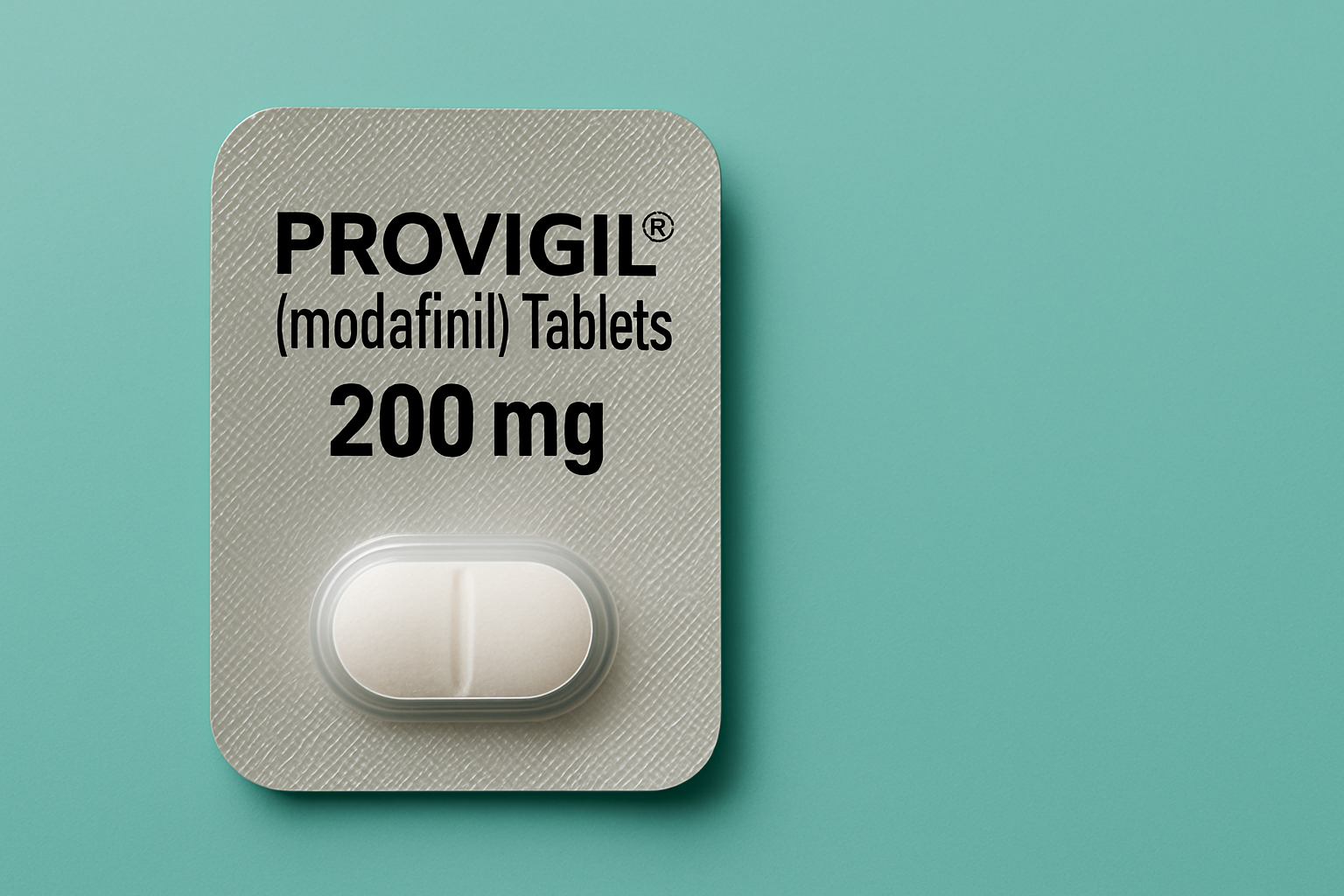
What Is Provigil? Uses, Benefits, and How It Works
Introducing a trusted, FDA-approved, as-needed treatment for excessive daytime sleepiness — Provigil.
Clinically proven to help individuals regain alertness, improve focus, and restore a productive, energized day when they need it most.
Provigil was developed to help you regain control of your day — on your terms.
Here’s how it works:

Enhances wakefulness
And reduces fatigue-related stress.

Taken as prescribed
Your healthcare provider will determine when to take Provigil based on the condition being treated and your individual needs.

Starts working in about 30–60 minutes
And can help maintain alertness for several hours — though your experience may vary.*

Avoid alcohol while taking Provigil
The effects of combining Provigil with alcohol have not been well studied — follow your healthcare provider’s guidance.
Do not use Provigil if you have:

Uncontrolled high blood pressure (hypertension)
Do not use Provigil if you have uncontrolled high blood pressure — talk to your doctor to determine if treatment is safe for you.

Known heart (cardiovascular) disease
If you have a history of heart disease, consult your doctor before using Provigil. Certain activities or conditions may put extra strain on your heart.
Provigil is not indicated for use in women or children, and it is not approved to increase energy or focus beyond treating excessive daytime sleepiness.
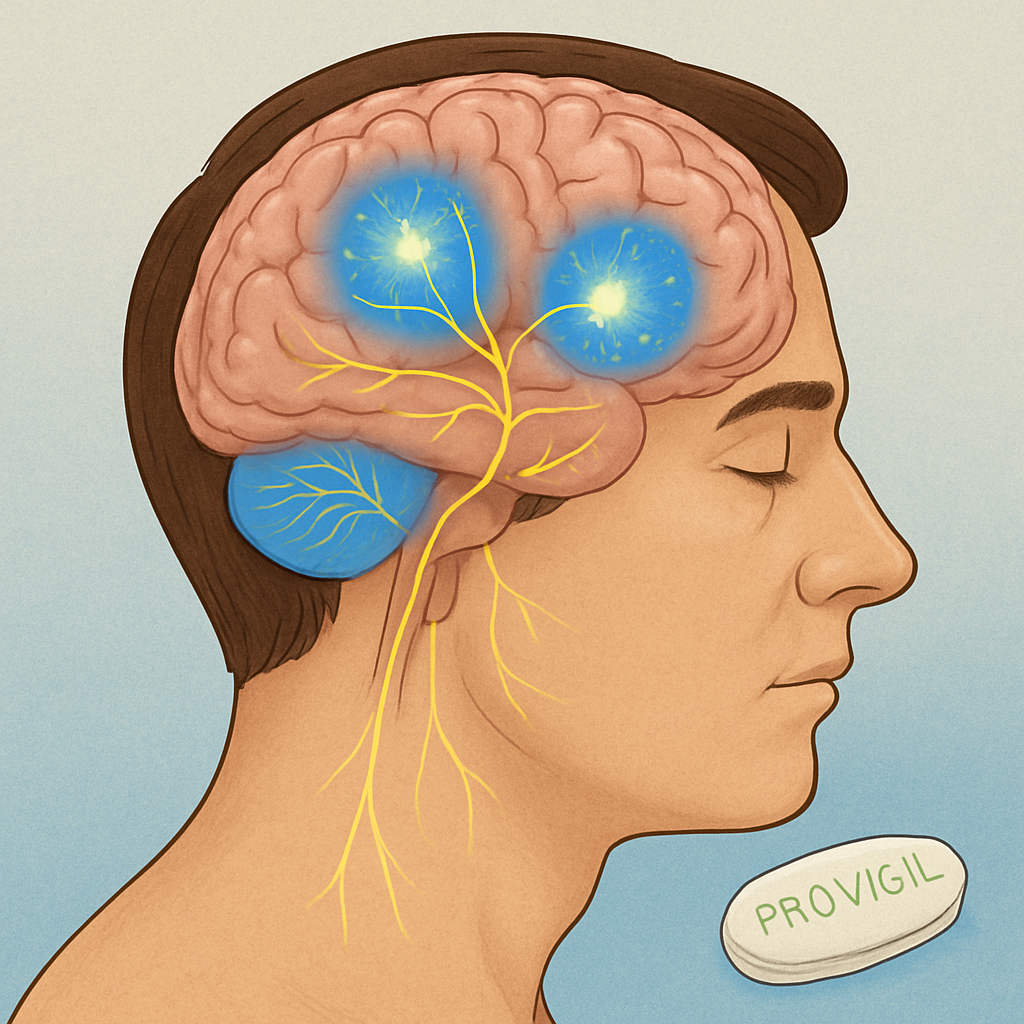
How does Provigil work?
Alertness and focus start in the brain but depend on proper chemical signals to maintain wakefulness throughout the day.
Provigil works by stimulating certain areas of the brain that regulate wakefulness and attention. It helps enhance the release of neurotransmitters that promote alertness, reducing excessive sleepiness.
Provigil does not provide energy like a stimulant but helps the body respond naturally to the need for increased focus and wakefulness.
See the results you’ve been waiting for
Provigil has been studied in thousands of individuals with excessive daytime sleepiness, across a wide range of ages and health backgrounds.† Many reported improved alertness, better focus, and a renewed sense of energy in their daily lives.
Their stories often reflect the frustration of living with constant fatigue — and the relief that comes with finding a solution that works.
†Clinical trials and decades of real-world use support Provigil’s safety and effectiveness.

Here’s what they experienced

Provigil improved wakefulness and reduced fatigue-related anxiety.

After taking Provigil, many individuals experienced lasting improvements in their ability to stay alert and focused, along with greater confidence and satisfaction in their daily activities.

The most common side effects of Provigil include headache, nausea, nervousness, dizziness, and trouble sleeping.

Nearly 80% of individuals who completed clinical trials with Provigil chose to continue treatment, citing improved alertness and quality of life.